Explore this conference! Great for first-time presenters, those in education or related fields examining qualitative research, narratives pedagogy, phenomenology, ethnography, auto-ethnography, and other related concepts. In April 2014, this conference will be held in beautiful Toronto!
Learn more:
http://www.isebio.org/
https://www.facebook.com/ISEbio
https://twitter.com/EducationalBiog
See the call here:
This blog examines the world of higher education through a communicative lens. Topics include: faculty life, socialization, issues faced by faculty and administrators, teaching and pedagogy, and technology in higher education. This blog candidly explores trends in higher education culture, access, information flow, and faculty life. @CommHigherEd #facultylife Views expressed on this blog are my own and do not necessarily represent the positions, strategies, or opinions of my employer.
Saturday, November 2, 2013
Tuesday, June 25, 2013
Faculty life and "hidden" work
Forbes just released this article about "hidden work" within our faculty life -- a familiar concept as this blog has often shared the hours of at-home work, the lost pockets of time in meetings, and the often unseen elements of this career. Thank you, Forbes! This career can be one where those hidden work hours become stifling and our stress levels can really spike just when someone outside academia mentions how our schedules "must be nice" - it seems to happen most often in summer or on a "break" from teaching.
Is it just me, or do we often find ourselves working into the wee hours sneaking time to grade around other, non-work events, logging into the email to answer students questions when we sit in meetings. How often do we find that the work we have to accomplish is done on a laptop as we try not to fall asleep in bed? Surely, I am not the only faculty member attempting to milk more out of our 24 hours each day than is humanly possible.
Explore the Forbes article and consider your hidden work...and any strategies you have implemented to protect the way the work creeps into our lives.
Consider also:
Professional Development - On A Budget!, Summer 2012
Tenure, Retention, Binders, and Budgets - Oh My!, Summer 2011
Make the Most of Your Summer, Summer 2013
The Stages of Spring Break, April 2011
Service: Who Participates?, March 2010
Is it just me, or do we often find ourselves working into the wee hours sneaking time to grade around other, non-work events, logging into the email to answer students questions when we sit in meetings. How often do we find that the work we have to accomplish is done on a laptop as we try not to fall asleep in bed? Surely, I am not the only faculty member attempting to milk more out of our 24 hours each day than is humanly possible.
Explore the Forbes article and consider your hidden work...and any strategies you have implemented to protect the way the work creeps into our lives.
Consider also:
Professional Development - On A Budget!, Summer 2012
Tenure, Retention, Binders, and Budgets - Oh My!, Summer 2011
Make the Most of Your Summer, Summer 2013
The Stages of Spring Break, April 2011
Service: Who Participates?, March 2010
Don't forget -- you can "like" Communication and Higher Education Blog on Facebook: http://www.facebook.com/CommHigherEdBlog and follow along on Twitter @CommHigherEd
Wednesday, June 12, 2013
Conference for research on social media (Call)
The Texas Social Media Research Institute is accepting
papers, panels, and training session/workshop ideas for its 3rd Annual Social
Media Conference on Friday, Nov. 8, 2013.
Deadline for proposals is June 30.
NEW CONFERENCE LOCATION - Join us at the Tarleton SW
Metroplex campus in Fort Worth this year. We expect about 250 attendees.
To discover more information about the 2013 Social Media
Conference, please visit http://www.tarleton.edu/TSMRI/SocialMediaConference.html
This conference consists of a few tracks: a SOCIAL MEDIA
RESEARCH, SMALL BUSINESS, NON-PROFIT, K-12, HIGHER EDUCATION, and TRAINING AND
DEVELOPMENT tracks. The conference planning committee is actively seeking
papers, panels, and training workshops focused on, but not limited to the following
topics:
- Mobile applications, interactions and technologies
- Facebook, Twitter, Linked In, Pinterest, Instagram (How
to Use the Technologies)
- Social Media in Business (Ideas for Entrepreneurs and
Large Organizations)
- Social Media in Education
- Social Media in the Non-Profit Sector
- Social Media in Interpersonal and Intercultural
Communication
- Practical Solutions for Social Media Problems
- Benefits and Disadvantages of Social Media in K-12 and
Higher Education
- Social Media and Generational Communication
- Social Media and Information Sciences/Library Sciences
- Social Media and Mobile Applications and Devices
SUBMISSION FORM: https://spreadsheets0.google.com/spreadsheet/viewform?formkey=dFowdFREQjJoa2w1WGxwQVRnVXVpQlE6MA
Additional Information
Possible forms of submission include: panels (including
roundtables and discussions), papers/abstracts, and training workshops.
Complete the conference submission form (http://www.tinyurl.com/SocialMediaConferenceCall)
AND e-mail papers/panels to TSMRI (texassocialmediaresearch@gmail.com)
no later than JUNE 30TH.
Participants will have an opportunity to publish their
papers in the conference proceedings book, which will be published on the Texas
Social Media Research Institute's website. The top paper will be considered for
publication in TSMRI's peer-reviewed publication, The Journal of Social Media
in Society.
If you have any questions, please contact the Texas
Social Media Research Institute via e-mail (texassocialmediaresearch@gmail.com)
or telephone (254-307-8211).
Feel free to forward to your colleagues and graduate
students.
Thursday, June 6, 2013
Free webinar! Student Success and digital changes on campus.
Communication on our campuses has changed a lot over the past decade--the Chronicle of Higher Education shared this opportunity to explore what the University of Oklahoma is doing to boost digital tools to foster student success.
FREE webinar on Thursday, June 27 at 11 a.m. Pacific (2 p.m. EST) to explore the ways the University of Oklahoma implements "24/7 business automation tools to deliver superior student services faster and cheaper-and the totally unexpected quality of education delivery and morale benefits they experienced as a result."
This webinar is not hosted by the tech folks on campus, but by an educator and an administrator.
To register, click here!
Don't forget -- you can "like" Communication and Higher Education Blog on Facebook: http://www.facebook.com/CommHigherEdBlog and follow along on Twitter @CommHigherEd
Wednesday, May 22, 2013
Make the most of your summer
Summer has me focusing on productivity. How can I get through the task lists that build up during traditional semesters? How can I find the energy for summer classes and new fall preps?
Whether you have a nine-month appointment without summer classes, enjoy a nine-month appointment with summer classes, or have a 12-month appointment with administrative duties, you can maximize your summer efforts. Here are a few tips that work for me.
Share your tried-and-true practices to make the most of your summer.
Whether you have a nine-month appointment without summer classes, enjoy a nine-month appointment with summer classes, or have a 12-month appointment with administrative duties, you can maximize your summer efforts. Here are a few tips that work for me.
- Change your work space. Spend a few hours a week at a coffee shop, library area, home office, or empty conference room. A change in the walls (or fresh air) around you can stimulate your mind and rejuvenate you after a long semester. Or, simply close your door--a small, seemingly simple feat that took me a long time to accept, as you can read in "Closing the door--Prioritizing Research" post from last summer.
- Compile your notes. You've probably got scattered sticky notes, e-mails to yourself, half accomplished task lists, and various research ideas thrown around your work areas. Take a morning (or evening) to compile all of those amazing ideas and start to make a plan of attack to accomplish them. Do this regularly to stay on top of the ideas that can easily get "lost" in the chasms of our tumultuous semesters.
- Consider using a "power hour" method to tackle tasks that are looming large and that you might be dragging your feet over. Yes, professors can procrastinate, too. Try this technique to help conquer the biggies and move through tough projects. Read more about "power hours" in a post from a few years ago, "Research Power Hours."
- Don't shudder, but one great technique is to put your phone away. I turn my phone on silent and shove it in my drawer for the first few hours of some high-output days. I have also heard of others using plug-ins and apps to block Internet access during productivity/writing times. I haven't gone to that degree, but if you are interested, LeechBlock for Firefox is one option.
- Watch out for "Mock Productivity" -- the time eaters that steal away any chance you have at tackling your to-do lists.
- Don't create such a massive task list that you dread facing it each time. Chunk items into projects, split up your tasks, and set realistic goals to avoid burnout or frustration.
I also set a "summer goal" for my professional life. What item is my top priority, which is second, which is third? Those are the go-to areas for my time and, when August rolls back around, I can mark of the major areas and feel a sense of accomplishment.
Share your tried-and-true practices to make the most of your summer.
Don't forget--you can "like" Communication and Higher Education Blog on Facebook: http://www.facebook.com/CommHigherEdBlog
Tuesday, May 7, 2013
Monday, April 15, 2013
Android App: Any.Do
As regular readers know, I very much love to explore the latest, greatest productivity tools. This may simply be a way to organize research projects into a spreadsheet format or it might be a nice app. I've explored many, from Astrid to Toodledo. I really like the options that these task tools use to help us increase our productivity.
I've just started working with Any.DO. This is a neat little app from This is a free app available on many operating systems. I use Android and find it works beautifully. Once you've installed the app, you can sign in with Facebook or your Google account. You can import your Astrid tasks, or start fresh with Any.Do. Like Astrid and Toodledo, you can add a social component with your tasks. This can increase your motivation to complete an item and can allow others to collaborate with you. The easy way to move tasks and modify them (you can drag a task from today to tomorrow) is very user-friendly. I especially like drawing a line through a task or speaking my task directly into the app.
Check out this video overview:
If you like productivity apps like I do, consider reading other posts here on Communication and Higher Education, including:
I've just started working with Any.DO. This is a neat little app from This is a free app available on many operating systems. I use Android and find it works beautifully. Once you've installed the app, you can sign in with Facebook or your Google account. You can import your Astrid tasks, or start fresh with Any.Do. Like Astrid and Toodledo, you can add a social component with your tasks. This can increase your motivation to complete an item and can allow others to collaborate with you. The easy way to move tasks and modify them (you can drag a task from today to tomorrow) is very user-friendly. I especially like drawing a line through a task or speaking my task directly into the app.
Check out this video overview:
If you like productivity apps like I do, consider reading other posts here on Communication and Higher Education, including:
- http://www.commhighered.com/2012/01/from-paper-to-app-productivity-plans.html
- http://www.commhighered.com/2011/06/when-sticky-notes-attack.html
Don't forget--you can "like" Communication and Higher Education Blog on Facebook: http://www.facebook.com/CommHigherEdBlog
Thursday, February 14, 2013
Student leadership
It is wonderful to see just how much our students can do! I was especially impressed the past few weeks as we have taken students to undergraduate leadership conferences. Students presented and did a GREAT job. Additionally, they learned about being responsible conference attendees and active participants.
First, we took students to the Southwester Black Student Leadership Conference. There, they learned about becoming more marketable, embracing leadership opportunities, and formed networks with students from many universities.
Following that trip, we took another group of students to the Diversity Leadership Conference at Sam Houston State University. The students submitted panels and were accepted as speakers. They learned a lot about facilitating discussion, leading a panel, and working with fellow presenters.
How can you engage your undergraduate students to embrace new leadership opportunities? It does not have to happen at far-off campuses. Work to get them involved, listen to their ideas, empower them to act, and see what they can deliver. It is key to offer specific and focused guidance throughout the process and have both pre- and post- trip meetings to help students prepare and process their journeys.
Consider which conferences or opportunities you could offer your students and then watch as they surpass your expectations!
First, we took students to the Southwester Black Student Leadership Conference. There, they learned about becoming more marketable, embracing leadership opportunities, and formed networks with students from many universities.
Following that trip, we took another group of students to the Diversity Leadership Conference at Sam Houston State University. The students submitted panels and were accepted as speakers. They learned a lot about facilitating discussion, leading a panel, and working with fellow presenters.
How can you engage your undergraduate students to embrace new leadership opportunities? It does not have to happen at far-off campuses. Work to get them involved, listen to their ideas, empower them to act, and see what they can deliver. It is key to offer specific and focused guidance throughout the process and have both pre- and post- trip meetings to help students prepare and process their journeys.
Consider which conferences or opportunities you could offer your students and then watch as they surpass your expectations!
You can LIKE "Communication and Higher Education Blog" on Facebook at http://www.facebook.com/CommHigherEdBlog
Wednesday, January 30, 2013
Teaching, research, and administration: Multiple roles in higher education
You're deep into the edits for your latest research project. One that has sat for too long waiting on you. Finally, you are finding time to focus on it when your phone rings or your inbox dings or your administrative assistant comes in to remind you that a new meeting was unexpectedly set up for you today. There's that pull -- the tug of the faculty duties against the responsibilities of the administrative life.
So you've got more than one role? Welcome to higher education. We're measured on multiple areas of performance and juggling them can, sometimes, lead to stress.
While these are all likely options you have experienced in one form or another, consider how well they work for you.
The Chronicle of Higher Education noted last fall that today's faculty are stressed and feeling the impact of multiple roles as budgets shrink in their departments and their time. This stress can be increased when exploring the dreaded "split appointment" role that has many wondering about time management and where to place their efforts when facing tasks lists that never end.
Think about evaluations. How do you evaluate the faculty/administrator appointment? Check your specific institution's handbook and know the expectations of those around and above you. This can help you prioritize your work efforts. If research is now a lesser part of your expectations, then balance your time accordingly.
Consider your split. If you are 50% administrator and 50% faculty member, consider how your hours work during the week. Review the past month. If you are in meetings for your administrative role for 12 hours a week and only have 8 hours left to actually DO the work for the administration role, you might want to explore the split with your superiors and colleagues. What expectations do they have? Talk with your fellow faculty members and department chair. Try to negotiate limited new course preps in the first year of the new appointment.
Reflect. Explore your calendar, output, energy level, and the expectations of those around you regularly in your first year on the split appointment. This will help you understand where your time and energy should go and help you communicate your expectations to others. This also creates a nice circle of communication where you can get feedback about the goals of those in both your faculty and administrator role.
Work smarter, not harder. Link your publications and research to your duties as an administrator. This way, your research informs your daily practice.
Different types of faculty/administrator positions exist and they are often called different terms ("shared/split/joint/dual appointments"). The shared duties exist for extension agents, coaches, clinical roles, department chairs, and directors, for example. Here are a few readings to explore if you are considering (or currently navigating) the split appointment:
So you've got more than one role? Welcome to higher education. We're measured on multiple areas of performance and juggling them can, sometimes, lead to stress.
How do you cope?
Endless spreadsheets mapping your time?
Multiple calendars?
Protected times on those calendars for different tasks (until those above you control or modify that time)?
16-hour working weekends?
The death of your social life?
While these are all likely options you have experienced in one form or another, consider how well they work for you.
The Chronicle of Higher Education noted last fall that today's faculty are stressed and feeling the impact of multiple roles as budgets shrink in their departments and their time. This stress can be increased when exploring the dreaded "split appointment" role that has many wondering about time management and where to place their efforts when facing tasks lists that never end.
Think about evaluations. How do you evaluate the faculty/administrator appointment? Check your specific institution's handbook and know the expectations of those around and above you. This can help you prioritize your work efforts. If research is now a lesser part of your expectations, then balance your time accordingly.
Consider your split. If you are 50% administrator and 50% faculty member, consider how your hours work during the week. Review the past month. If you are in meetings for your administrative role for 12 hours a week and only have 8 hours left to actually DO the work for the administration role, you might want to explore the split with your superiors and colleagues. What expectations do they have? Talk with your fellow faculty members and department chair. Try to negotiate limited new course preps in the first year of the new appointment.
Reflect. Explore your calendar, output, energy level, and the expectations of those around you regularly in your first year on the split appointment. This will help you understand where your time and energy should go and help you communicate your expectations to others. This also creates a nice circle of communication where you can get feedback about the goals of those in both your faculty and administrator role.
Work smarter, not harder. Link your publications and research to your duties as an administrator. This way, your research informs your daily practice.
Different types of faculty/administrator positions exist and they are often called different terms ("shared/split/joint/dual appointments"). The shared duties exist for extension agents, coaches, clinical roles, department chairs, and directors, for example. Here are a few readings to explore if you are considering (or currently navigating) the split appointment:
- Brittingham described the elusive balance of teaching, research, and service in her 1996 paper, "Balancing split appointments: a view from the trenches" which explored extension offices.
- Coaching as a split appointment is examined in Hasting's chapter.
In the end, realize the multiple roles we have as faculty can often start to feel overwhelming. This is true whether those multiple roles are truly a "split" appointment or just the typical trio of research/teaching/service expectations we face.
What strategies work for you?
Consider also, exploring the earlier entry: Transition to the split appointment, September 2012
You can LIKE "Communication and Higher Education Blog" on Facebook at http://www.facebook.com/CommHigherEdBlog
Friday, December 14, 2012
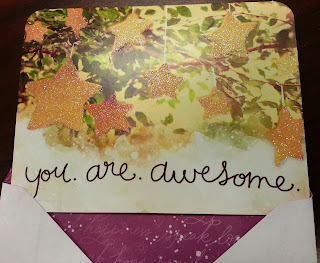
"You are awesome!" Communicating appreciation on the job
![]() |
| Show your appreciation |
Too often, we allow this tunnel-vision to interrupt our collegial relationships and can lead to us taking advantage of our peers and taking our staff for granted.
There are easy ways to step outside of your own congested mind to say a few kind words of appreciation. Here are some general tips to help communicate the appreciation that can, sometimes, become buried under our task lists.
Tell others about their strengths. Just hearing, "you're really good with the students." Or, "It is clear you love advising--and you're very clear with the advisees." Small things like, "Fixing the copier saved the day, thanks!" can go a long way when someone is having a stressful or busy day.
Say "thank you" every single time something gets done. No exceptions. No matter how trivial, work this phrase into your every day jargon. Your administrative assistant returns pressing phone calls (saving you valuable time), then simply thank him or her. Don't brush it off. Show him/her that it means something to you. The "thank you" culture will catch on and appreciation becomes easier to show.
Break down large projects into small tasks. No one likes to be overwhelmed (and as faculty or administrators, we know how it feels to be overwhelmed!). Avoid dumping huge projects on those around you. Instead, reach out with clear plans, consistent vision, and manageable tasks to ease the burden of a huge project.
Check in often. Ask "what do you like about the work we've been doing?" Or, "what could we improve?" Put your ego in check and LISTEN when others are commenting on their work day -- what may seem like a small detail (a parking space, for example) for someone can easily make every day start out in the "crummy" column. My mantra: "Ask. Listen. Consider. Communicate. Act."
Go beyond work conversation. You do not have to be Besties with everyone at work, but a simple conversation about a colleague's family or a follow up on their on-going car problems can show that you care and value them beyond the work they are doing.
![]() |
| Easy steps to being thankful: Keep cards on hand |
Keep cards on hand. These little thank you notes can make someone smile -- and are particularly poignant when big projects are completed. My desk drawer always has notes and little items to help make a rough day easier or to help show others I appreciate what they do.
Post a quote. Instead of a sticky note of tasks for someone, leave a powerful quote or a kind word in a highly visible color. They won't expect that little note and some encouragement can kick-start our days.
If you feed them...Yes, bring in a little food, sweets, or fun. It might be a new flavored coffee or a simple donuts run, but sharing food breaks down walls, opens communication lines, and can perk up someone wilting under pressure.
Send an email. It is easy to threaten to write a note when services are terrible--but how often do we write a note when services are fabulous? I did this the other day and received amazing feedback from the supervisor of the staff member who effusively thanked me for going out of my way to comment on an employee who was doing good work.
![]() |
| A note of appreciation sent this week |
Thank those who help in front of others. Recognize them. Show how you value them beyond your own office or department.
With moments a day, you can create a culture that values appreciation and shares recognition.
What steps do you take to communicate appreciation in your workplace?
Don't forget, you can "like" Communication and Higher Education Blog on Facebook:http://www.facebook.com/CommHigherEdBlog
Tuesday, December 11, 2012
Position openings! Tenure-track in communication
Readers, here are two great openings to consider. Please pass them on!
Assistant Professor of Communication Studies
Teach Computer Mediated Communication, Communication
Research methods. Must be willing to teach a combination of Communication
Theory, Survey of Communication Research, Seminar in Organizational
Communication, Seminar in New Communication Technology, Seminar in
Communication Ethics, Seminar in Applied Social Media, Seminar in
Computer-mediated Communication. Primarily responsible for the teaching/learning process and
will also participate in the necessary operations of the institution. Minimum requirements include: Ph.D. in Communication Studies or related field. Must have
at least two years of full-time experience teaching college/university courses
in some combination of communication theory, communication ethics, new
communication technologies, applied social media, computer-mediated
communication, research methods, survey of communication, organizational
communication. Must have evidence of strong, ongoing, collaborative research
agenda with secured external funding. This position requires teaching and in the classroom Tarleton's Southwest
Metroplex campus in Ft. Worth. Preferred requirements:Three years teaching experience with online and graduate
courses. Ideal candidate will communicate effectively and relate well with
others (including evidence of collegiality with colleagues, as well as
undergraduate and graduate students), hold membership in and present to
professional communication organizations, be experienced in advance research
methodologies applied specifically to communication research, possess
demonstrated leadership and teamwork skills, provide evidence of facilitating
experience-based student learning and of coordinating graduate student
research.
The department requires a cover letter, resume and
transcripts for this position. If you are not able to attach the documents when
applying, please mail the requested documents to:
Dr. Charles Howard
Tarleton State University
Department of Communication Studies
Box T-0230
Stephenville, TX 76402
If mailing, please make sure you reference the Requisition Number and title of this position.
Dr. Charles Howard
Tarleton State University
Department of Communication Studies
Box T-0230
Stephenville, TX 76402
If mailing, please make sure you reference the Requisition Number and title of this position.
Assistant Professor of Communication Studies
Teach a variety of communications courses centered on interpersonal,
intercultural and basic speech. The individual will conduct research in area of
specialization; serve on University committees; advise students; and
participate in appropriate professional activities. Ideal candidate will communicate effectively and relate well
with others (including evidence of collegiality with colleagues, as well as
undergraduate and graduate students), hold membership in and present to
professional communication organizations, be experienced in advance research
methodologies applied specifically to communication research, possess
demonstrated leadership and teamwork skills, provide evidence of facilitating
experience-based student learning and of coordinating graduate student
research. Minimum requirements include: Ph.D. in Communication Studies or closely related field.
Must have evidence of strong ongoing, collaborative research agenda with
secured external funding. Must have 2 years' experience teaching basic college
speech courses along with some combination of interpersonal, organizational, small
group, and persuasion.
Dr. Charles Howard
Tarleton State University
Department of Communication Studies
Box T-0230
Stephenville, TX 76402
If mailing, please make sure you reference the Requisition Number and title of this position.
Monday, December 10, 2012
CALL for Proposals: International Society for Educational Biography
INTERNATIONAL SOCIETY FOR EDUCATIONAL BIOGRAPHY
Call for Papers
The Thirtieth Annual Conference
San Antonio, Texas April 4-6, 2013
Submission deadline is February 4, 2013
I.S.E.B. invites academics, teachers, graduate students, researchers and anyone who engages aspects of biography in their writing, teaching, research, or other professional endeavors to submit proposals for our annual conference. Previous papers have come from a variety of disciplines including history, education, English, religion, and many more. We encourage submissions from graduate students.
Possible topics include: Collective biographies, Role of biography in the history of education, biography and fiction, general biography, plot structures of biographies, biographic criticism, publishing biographies, feminist approaches to life writing, oral history, experimental approaches, ethical issues, methodology, and the use of biography in classroom instruction.
Proposal Information: The refereed conference invites individual papers, panel discussions; and other presentation formats. Generally, the conference schedule allows 30 minutes for individual papers (includes discussion time), and 60-75 minutes for panel sand other kinds of presentations.
Proposals should be sent as attachments and include:
1) A title page which includes title, name of author(s), address, telephone #, and e-mail.
2) A 250-350 word abstract describing the importance of the topic, the approach taken & the need for any technology.
3) A statement with any time and day that you cannot present.
Send proposals by surface mail, or e-mail attachment to
Dr.Raji Swaminathan, Director, Urban Education Doctoral Program
Department of Educational Policy & Community Studies
515 Enderis Hall, University of Wisconsin-Milwaukee,WI 53211
Phone: 414-229-5752 Fax: 414-229-3700 Email: swaminar@uwm.edu
Department of Educational Policy & Community Studies
515 Enderis Hall, University of Wisconsin-Milwaukee,WI 53211
Phone: 414-229-5752 Fax: 414-229-3700 Email: swaminar@uwm.edu
DUES & CONFERENCE REGISTRATION:
ALL persons presenting papers MUST be current in ISEB dues. The Conference Registration fee is a separate fee from membership dues.
Membership - regular - (includes ISEB's journal, Vitae Scholasticae) $75
Membership - retired - (includes conference registration, does not include lunch or journal) $50
Membership - student -(includes conference registration, does not include lunch or journal) $30
Conference registration (before April 1. Includes lunch) $170
Conference registration (after April 1. Includes lunch) $190
Additional lunch (optional) $45/each
Student subscription to Vitae Scholasticae $40
Membership - retired - (includes conference registration, does not include lunch or journal) $50
Membership - student -(includes conference registration, does not include lunch or journal) $30
Conference registration (before April 1. Includes lunch) $170
Conference registration (after April 1. Includes lunch) $190
Additional lunch (optional) $45/each
Student subscription to Vitae Scholasticae $40
*Please complete the membership/conference form at http://tinyurl.com/3s3z67q. Then follow the link at the end of the membership survey to pay via PayPal or mail dues and registration to:
Lora Helvie-Mason, Tarleton State University , PO Box T-0490, Stephenville, TX 76042, helviemason@tarleton.edu, educationalbiography@gmail.com , 254-968-9488
Conference Hotel: MENGER HOTEL 204 Alamo Plaza, San Antonio, TX; 800/345-9285. The Menger Hotel is an historic hotel located across the street from the Alamo and about a block from the River Walk.
The rate is $132 US single or double; $20.00/night roll away bed. Committed guest rooms will only be held until March 3 so please reserve early. Reservations received after the cut-off date will be accepted on the basis of availability. If
more persons reserve early than are in the guaranteed room block, the
rooms could be taken prior to the cut-off date. (Some rooms have been
reserved for those who come early and for those who plan to stay over
the weekend).
PLEASE SHARE THIS CFP WITH OTHERS
Website: http://www.isebio.org/
Don't forget, you can "like" Communication and Higher Education Blog on Facebook:http://www.facebook.com/CommHigherEdBlog
Tuesday, November 6, 2012
Return of the Gadget Girl: Apple to Android
After over a year on an Apple product (iPad) supplied
by an institutional initiative, I found myself exploring options for a new
tablet. My primary question: should I go with another Apple item?
I found myself at a unique point in my gadget driven
life, I had none. My institutional change led to most of my tech items sticking
with the previous institution and my work at home being driven by a clunky,
much forgotten laptop with, get this, Vista.
I really missed having a tablet.
After exploring a few options, I made one of my famous
pro/con lists. My family may mock me for their continued use, but it is something
that remains helpful to me especially as I face bigger decisions.
The apps are strong, the resources for the classroom are excellent, and I was already familiar with the iPad. However, I never had an iPhone and had lived in the Blackberry world since smartphones came on the scene, but my phone was on its last leg. All signs were pointing to a change--but did I want to make a full commitment and dive into a life of Apple products or was it time for a shift?
As I explored what
I loved about the iPad and what I wanted, I realized I wanted something that
could produce a bit more work--the only way I could do that, would be to focus
on storage and accessibility. I could continue working with the cloud or
consider items that might allow me to connect beyond the cloud. Were there
tablets that could serve the same function as my trusty, and returned to my previous institution, netbook? Is it possible
to kill two birds with one stone?
As much as I love the iPad, it simply pushed me deeper
than I wanted to go into the Apple world to maximize its use. I did not want an
iPhone. What was a gadget-girl to do?
I looked at several options, including Lenovo IdeaTab, iPad, the Microsoft Surface, and kept
returning to the Asus Transformer. It had removable storage options - a HUGE
pro on my pro/con list. It also allowed a connection through USB and SDcards
along with a focus on very similar capabilities as the iPad. The Transformer is an Android device and most
of the apps available from Apple are easily available through Android.
In the end, I determined that I would take a risk and
make a change -- I went all out into the Android world! I got the Galaxy sIII and the Asus Transformer tf700T and it has been a transition where I
learn the processes of another system.
Granted, I miss a few items, including my favorite app
for class, The Attendance App, which is not yet available for Android and some of my
nephew's favorite games, but I found the transition very easy
overall.
Some of my favorite things about the transition to the
Asus Transformer tablet include:
- Connecting everything with my Google account.
- Attaching my huge 500 Gig hard drive and taking EVERYTHING with me wherever I go.
- Most of the apps that I love are available, including YouSeeU, my favorite social media options, the amazing Astrid, and my news sources.
- Just swapping out the SD card to share pictures, videos, and files with other devices makes me smile. So easy!
- Though I loved the iPad, I must admit the keyboard option is much better with the Transformer than with the iPad. I had a great blue-tooth keyboard from Brookstone for the iPad, but the Transformer's easy click into place keyboard is amazing and it pushes my battery life to amazing levels.
Apple to Android can be a slight challenge, but overall,
I am excited by this change and look forward to exploring more opportunities. What are your thoughts? Have you had to transition systems? Share!
Don't forget, you can "like" Communication and Higher Education Blog on Facebook:http://www.facebook.com/CommHigherEdBlog
Subscribe to:
Posts (Atom)


